Showing posts with label zoology. Show all posts

Wednesday, December 9, 2015

Snow Saves Lives

Biology concepts – subnivean zone, chionophiles, antifreeze proteins, UV vision, snow blindness, photokeratitis


Rudolph the red nosed reindeer didn’t start as a song or
even a Rankin and Bass stop motion special. It was a story
published by the Montgomery Ward Stores.  The author’s
brother-in-law was Johnny Marks, the king of Christmas
songs. He adapted the story into a song that was recorded
by Gene Autry in 1949. Then it went viral. The TV
special didn’t appear until 1964.
Rudolph with his nose so bright – only he could lead Santa’s sleigh through the snowstorm. What a great mutation, a beaming red nose – although that might be quite the draw for predators. In real life, reindeer have indeed evolved to overcome the snow, but also to rely on it. You could even speculate that Rudolph would die without the snow.

This leads a biologist to ask, "Just who and what is depending on the snow; how does snow affect the living world?" Many animals have snow in their name, but that isn’t always a good clue. The snowy egret and the snow crab are examples.

The snowy egret is called that only because of its white plumes, while the snow crab is so named because its hunting season is when the snow is the deepest. Mike Rowe, the hardest working man in show business since James Brown, taught watchers of The Deadliest Catch that the snow crab is better called the opilio crab (Chionoecetes opilio). Fisherman that go to sea to put them on your table are a breed unto themselves.

Egrets and crabs don’t help us to investigate the question of the effects of snow on life. The easy observation is that snowy winters are something that organisms have evolved to overcome or even use to their advantage. They have developed ways to survive the harsh conditions of the snowy season or to exploit the white stuff.


The snow leopard is unique amongst cats. It has blue-green or
gray eyes, while most other cats have yellow or black eyes. It
also can’t roar. It has a partially ossified (turned to bone)
hyoid cartilage, which was thought to be the key to cat roars,
but it just can’t manage more than a screech. Maybe it just
doesn’t feel like roaring – or maybe it fears an avalanche.
The snow leopard (Panthera uncia) is an animal that overcomes snow. It has evolved large paws to act as snowshoes. The snow leopard can easily stalk prey and run in snow as deep as 36 in (1 m). Their paws also have fur on all surfaces, to insulate their footpads from the cold and wet snow.

On the other hand, their markings are better suited for their preferred living and hunting grounds. They aren’t nearly as white as you would expect. They like to live on rocky ledges and they descend into the forests to hunt prey when the weather gets really cold (because that’s where the prey are), so their brown tints and spots help them blend in to both habitats.

The lemming is an example of a small mammal that exploits the snow for cover, others being mice, voles, and shrews. The Norway lemming (Lemmus lemmus) moves from the low mountainsides up to higher elevations (opposite of the snow leopard for obvious reasons) as the snow falls. They don’t live underground, although they may nest there, but they don’t live on top of the snow either.

The lemmings dig vast networks of tunnels in the snow where it meets the ground. This is called the subnivean environment (sub = below, and niveus is Latin for snow), and they race around looking for vegetation to eat and other lemmings with which to mate. The many openings in the snow may seem to be doors to the subnivean environment, but the lemmings rarely come out of the snow. They are more likely vents to release carbon dioxide from lemming breath and plant decomposition.

Lemmings don’t jump off cliffs in large numbers when they
get older. That is a myth. However, they may be a little
challenged when they run for new feeding grounds in great
numbers – some seem to find their way to cliffs and accidently
go over head first. They are solitary except for mating times,
as is seen here. He’s taking flowers to his girl.

Some animals, like some big cats and large owls have evolved a hearing sense that allows them to pinpoint lemmings under the snow, but the subnivean tunnels work well enough that lemming populations usually skyrocket every 3-4 years, and then plummet as resources become scarce. Their success is in some ways their downfall.

And speaking of falling, the lemmings are also responsible for some human tragedies. When the temperatures fluctuate and the tunnels remodel with ice and snow, the layers of snow can become unstable. The dense snow above the tunnel system will crush and slide off the subnivean layer and …. look out below, here comes the avalanche. And I thought skiers that flock to resorts in order to fall off the mountain repeatedly were the lemmings!

You wouldn’t expect it, but some small arthropods (insects and such) have found ways to live in the snow. When a warmer winter day pops up, so do the snow fleas (Hypogastrura nivicola). You will see them as black specks on the snow – appearing in the thousands at the bases of trees. They aren’t really fleas at all, but a species of springtail (see picture). The reason they come out is not known exactly, but I think that any snow melt due to warmth might drown them in their below ground hiding places.

On the left is a convention of snow fleas discussing the merits
of elm leaves as decaying foliage – or maybe that’s the buffet.
On the right is a single snow flea, called a springtail. The back
legs can apply a load and then are released. They spring from
place to place, but they aren’t “fleaing.”

Snow fleas have an antifreeze protein that keeps them alive over the winter. This isn’t an exception, many animals have chemical mechanisms to prevent freezing, but the protein in snow fleas is unlike any other. The snow flea anti-freeze protein (sfAFP) may serve humans as well. See the post here for more on anti-freezing mechanisms, and here to show that snow midges are the largest animals in many parts of cold Antarctica.

A 2008 project produced the protein in a laboratory and showed that it may be possible to use it to preserve organs for transplant a longer time. Storage at cooler temperatures would allow for longer shelf lives for organs, but they can become damaged by ice crystal formation. The researchers also made a version of the protein using D-amino acids. We have talked about these before – but here they work to our advantage, by making the protein less susceptible to enzymatic degradation, while still providing antifreeze function.           

Snow melt mosquitoes, on the other hand, are winged. Living from northern California up to the arctic tundra, snowpool Aedes mosquitoes (many species) lay their eggs and their larvae develop in the pools of melted snow as the weather warms. This gives them a head start on the rest of the mosquito world. It would seem many forms of life have found ways to exploit snow.

Watermelon snow is caused by an alga that grows in the
snow. Chlamydomonas nivalis is a green algae, but it also
produces a lot of anthocyanins (red) pigments. They
absorb the sunlight and generate heat. This melts some
of the snow and gives the algae the water it needs to grow.
The algae serves as a food source for other animals
during the winter, including the snow fleas.

Then there are the chionophiles (chioni is Greek for snow, and phile = lover). We have talked about the psychrophiles, organisms that prefer cold temperatures, but chionophiles need the snow to survive.

It may seem counterintuitive, but many organisms need the snow to keep them warm. It’s the wind that blows heat away from around the skin, so a layer of snow actually helps trap heat and protect form the wind. Lemmings give snow a big thumbs up (if they have thumbs) for snow as an insulator.

It isn’t just animals that need a “blanket” of snow to retain heat and protect from the wind. Winter wheat needs the snow, but for several reasons. Sure, the snow provides insulation for the young shoots that were planted in the late fall and go dormant until the spring. Nothing worse than frozen wheat.

But the snow also provides a source of water when it melts. This loosens the ground to give the wheat plants strength to push through the earth, and for early water for growth. Snow also gives stability to the young plants out on the plains. Lots of wind out there, enough to knock down and break the fragile plants when they are young. A cast of snow surrounding the stem helps keep them upright. The wise man says, “ Rain versus snow, the wheat doesn’t know the difference, but the farmer wants snow in the winter.”


Winter wheat is susceptible to grey snow mold, even though
it can produce antifungal compounds. This can decimate
entire crops of wheat, especially if the snow fall lasts deep
into the spring. The bottom image shows a close up of pink
snow mold on grass. This is a particular problem on golf
courses – I’m not going to cry over that.
Growing in the snow has also created a problem for wheat, a problem caused by another snow grower. Snow molds (gray or pink) remains dormant in the summer, and only start growing when covered by a layer of snow. As the snow melts in the spring, the damage is down, causing circular patches of gray or brown grass, including wheat, which is a grass.

Snow mold doesn’t attack plants on exposed soil – but they may be killed by the more extreme temperature. They do attack where there is snow, and there is more damage in the deeper snow banks – it seems they do their damage under cover of snow only – more snow, longer time for complete melt, more damage.

The snow mold excretes its antifreeze proteins, not to prevent itself from freezing, but to keep ice crystals from forming or altering around the fungus. Perhaps they are protecting their food to keep it growing and a good source of nutrients; often that food is wheat. But wheat also has tricks. A 2002 study shows that winter wheat produces several proteins that inhibit the growth of the mold.

Now back to Rudolph. To understand his exception with snow, we first need to talk about photokeratitis (photo = light, keratin = the protein found in cornea, and it is = inflammation), better known as snow blindness. For Eskimos and other humans, the 90% of the sunlight’s UV waves bouncing off the snow is enough to burn the cornea and lead to fuzzy vision or even blindness. The cornea is a protective structure, keeping the UV rays from injuring the retina.


This is part of the study that discovered UV vision in
reindeer. I get the part where they examine the retina,
but what I need to know is how they get them to read
the lines of letters on the eye chart.
Other animals are prone to snow blindness as well. Polar bears have a nictating membrane to protect the eye, but the reindeer have gone much further. Of all the mammals, only the reindeer actually sees in the UV range.

Their cornea doesn’t stop UV rays from entering the eye, yet they don’t suffer damage. The pigments of their retina absorb the energy and convert it into images, just like our eye does with visible light only. A good study would determine how they are protected – you work on that. It might be related to a new study that shows that reindeer eyes change color with the seasons, becoming blue in winter.

Being able to see in the UV range is what saves the reindeer. Predators that blend in with the snow still show up easily in UV, and well as urine stains in the snow that mark the territories of predators or other reindeer. Using his UV vision, the reindeer is better protected from predation. And it only works because of the snow – no snow, no reflected UV light. And thus we learn…. snow saved Christmas.

Next week, the biology of one of the original Christmas gifts.


Hogg C, Neveu M, Stokkan KA, Folkow L, Cottrill P, Douglas R, Hunt DM, & Jeffery G (2011). Arctic reindeer extend their visual range into the ultraviolet. The Journal of experimental biology, 214 (Pt 12), 2014-9 PMID: 21613517

Kondo H, Hanada Y, Sugimoto H, Hoshino T, Garnham CP, Davies PL, & Tsuda S (2012). Ice-binding site of snow mold fungus antifreeze protein deviates from structural regularity and high conservation. Proceedings of the National Academy of Sciences of the United States of America, 109 (24), 9360-5 PMID: 22645341

Pentelute BL, Gates ZP, Dashnau JL, Vanderkooi JM, & Kent SB (2008). Mirror image forms of snow flea antifreeze protein prepared by total chemical synthesis have identical antifreeze activities. Journal of the American Chemical Society, 130 (30), 9702-7 PMID: 18598026

Kuwabara C, Takezawa D, Shimada T, Hamada T, Fujikawa S, & Arakawa K (2002). Abscisic acid- and cold-induced thaumatin-like protein in winter wheat has an antifungal activity against snow mould, Microdochium nivale. Physiologia plantarum, 115 (1), 101-110 PMID: 12010473


For more information or classroom activities, see:

A great book on the mechanisms of survival in the winter and how cold and snow affect life is entitled
           Winter World, The Ingenuity of Animal Survival
           Bernd Heinrich
           2003
           ecco publishing, an imprint of Harper-Collins
           ISBN 0-06-019744-7

Snow blindness –

Reindeer –

Subnivean layer –

Winter wheat –

Snow mold –

Watermelon snow -


Wednesday, September 30, 2015

Twins of Different Seasons

Biology concepts – twins, dizygotic, delayed interval delivery, steroid hormones, lung development, time of birth


Leonardo DiCaprio starred as the twins Louis and Philipe in
the latest iteration of The Man In The Iron Mask. I’m partial
to Gabriel Byrne, Gerard Depardieu and Jeremy Irons as the
three musketeers. Louis and Philipe were monozygotic
twins, and they are more often born in close proximity,
but not always.
Dateline Monaco, December, 2014 - Princess Charlene and Prince Albert announce the birth of royal twins. The girl, Gabriella, arrived two minutes before the boy, crown prince Jacques Honore. Gabriella is the older, but Jacques is the heir and will inherit about 1 billion dollars. This is according to a state constitution that dates to the 1600’s.

This isn’t the first time twins have thrown a cog in the works of succession. Consider the case of The Man In The Iron Mask. Alexandre Dumas gives us a story of intrigue, murder, revenge and affairs of state in 17th century France. King Louis XIV isn’t the ruler that France deserves, but he’s the one in power and he is cruel.

The musketeers obey him, but begrudgingly. When it comes to be known in the halls of the palace that a young man in the country looks just like the king, we learn that Louis XIV is a twin. The prior king had sent the younger twin (by minutes) to the country to avoid the problems of succession. Louis XIV finds him, imprisons him and forces him to wear the iron mask.

Needless to say, everything turns out just fine. Philipe, the younger twin replaces Louis on the throne with the help of the musketeers and saves the populace from starvation. So, yes, in the end it seems that twins can be a bother on succession.

The real story of the iron mask most likely includes an older brother, not a twin. No one really knows who he was, but he was a prisoner of Louis XIV and was hidden behind a mask. He died in 1703, and his treatment while in prison suggests that he was a royal. Hence, the idea that he may have been a brother of the king.


This is the birth of a baby orca at Sea World in San Diego
last year. When is the baby born? Some people say it’s when
the baby takes its first breath. This is tough to judge for a
whale; it is born underwater, but it has to breathe air. The
first thing mom does is lead baby to the surface. So, the
most common determination is when the whole body
is outside mama. 
Such is the mess that a few minutes can make. If the other baby had pushed his way in front, the king would have been different all along. A few ticks of the clock make all the difference in twins. But how long can the gap be? Let’s continue our discussion of what makes twins more than just siblings. Last week we discovered that "race" isn’t a barrier to twindom – but how long apart can two babies be born and still be considered twins?

The first thing to consider is what defines time of birth. Because certain actions, like delivering the body after the head is out, or cutting the umbilicus after delivery can be delayed by complications, time of birth is usually defined as when the complete body hits the air. For a natural birth, this means a decent time gap between twins. They’re coming down a one lane road and there’s no room to pass or drive side by side. In C-sections, it’s almost always just a minute or two difference, but with natural delivery the average is 17 minutes.

If that time gap comes at the right moment, twins can be born with different birthdates. How many twins this affects in the US is low – and here’s why. About 98% of US births take place in the hospital, and this is probably higher for twins because the risks during delivery are higher.

Hospitals like to deliver babies when it is more convenient for doctors and staff, so they induce labor plan caesarian section births for day time. Therefore, the hours of the day when most babies are born in the United States are between 8:00 am and 9:00 am and between noon and 1:00 pm.


Most mammals are born during the inactive period for
their species – diurnal animas are born at night and
nocturnal animals are most often born in the day. Pigs, for
example are born in the nighttime, so are horses – just
ask any veterinarian.
But, if you have your baby at home, or somewhere other than the hospital, the most likely time is in the wee hours of the night - between 12:00 am and 4:00 am. Evolution may play a role here, a history of nomadic movement meant that mom and baby might be left behind during a daytime delivery, but nights were a time to hide and protect each other – a better time to deliver a baby.

The time of midnight is an artificial construct, made by man to order his day, so having one twin born on the left of midnight and the other born on the right side doesn’t really make a difference. Their birthdays differ by one digit and mom and dad might feel compelled to plan two different parties, but that’s about it.

Likewise, if the twins are born across a midnight that occurs on the last day of a month, then twins could be born in different months – astrologists might consider this important, but I don’t know who else would. Your accountant might point out that if the two children were born across the midnight hour on December 31st, then you’ll get the tax exemption on just one of your two kids for that first year. OK, now I’m listening.

Aaron and Luke Hegenberger were born on the night of December 31st, 1999. Aaron was born at 11:53 pm, while Luke was born just a few seconds after midnight. So, even though they entered the world separated by only eight minutes, the boys were born on different days of different months of different years of two different millennia!


Twins born by C-section have shorter gaps between births
for obvious reason. The short time to second birth is
important, as second twins do better with shorter gaps.  One
study showed how much more stressed the second
twins are while another discussed the idea that
C-section is suggested if the time between births is getting
low, even though C-section has its own risks.
In general, if the babies are near full term, a short birth interval is better, but there can be times when leaving one bun in the oven is advisable. With the use of more assisted reproductive therapies like in vitro fertilization, there are more twins being born, but also more problems – twin births always have more chance for problems.

There can be growth discordance, where one fetus just matures faster than the other. Delivering twin A might be warranted, but twin B could use another few days of maturation. This brings us to the idea of delayed interval delivery (DID) of multiples. Medical professionals now have ways to deliver one baby and delay the birth of the second.

It is a sad thing to contemplate, but twin pregnancies are associated with higher rates of miscarriage. When one twin dies in utero and must be delivered, all efforts are made to save the second twin. This would include delaying its delivery until it is past the 25th week. Just a few days can make all the difference.

The lungs are the primary concern when delivering preterm infants. At about 25 weeks of gestation, the lungs begin to change morphology. They go from the canalicular stage (tubal) to the saccular stage, meaning they start to develop alveoli, the air exchanging sacs of the lung.


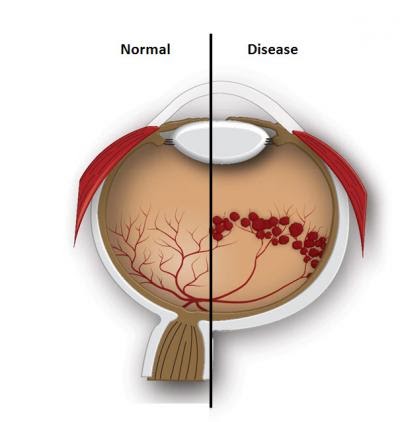
Retinopathy of prematurity is caused by using high tension
oxygen with preemies. The high pressure oxygen helps with
immature lungs, but it causes overgrowth of blood vessels
in the retina and can lead to complete blindness. This
occurred a lot in the 1960’s before they realized the risks.
At this same time, the lungs start to produce surfactant, a phospholipid and protein concoction that allows better gas exchange across the fluid/air interface by reducing the surface tension of the lung tissue. Surfactant also keeps the lung surfaces from sticking to one another during exhalation so that inhalation is easier.

Many studies have shown that if one twin is delivered before 25 weeks, there is a lower chance of survival. Delaying the second twin’s delivery is met with a much improved prognosis. One study indicated that in one health center, 25% of first twins born between 15-25 weeks of gestation survived, but delaying the second delivery to 25-31 weeks improved the survival of the second twin to 75% percent.

A six year study in a different birthing center showed a 14.3% survival for 22-25 week first twins, but delaying the birth of the second twin by just nine days on average improved their survival to 57.1%. This is astonishing.

I can think of two main issues when delaying birth of the second twin; 1) how to stop the second twin from coming out, and 2) how to make the most of the delay time. Both are critical and both can be managed in some cases.


Oxytocin is the hormone that induces labor contractions. They
are described as wave-like. They start at the top and contract
down the sides of the uterus. This forces the baby’s head
toward the birth canal.
To delay the second delivery, doctors can give tocolytic (toco from Greek = childbirth and lysis = release or dissolve) drugs. These compounds, like Nifedipine and Terbutaline, work to suppress labor. That means that they relax the uterine walls and counteract the body’s hormone (oxytocin) induced reaction to create contractions and push the baby out. But there are other ways as well.

Doctors can close the birth canal with sutures (called cervical cerclage); this often has the same effect on contraction production, or they can use an endometrial loop.

But the main issue is to get the second baby’s lungs to mature so that they can survive on the outside. You could just wait as long a possible to deliver the second baby, but giving them a push is better. Antenatal corticosteroids (ante = before and natal = birth) corticosteroids are a way to help out.


Baby Stewie from Family Guy got into some steroids and bulked
up in one episode. These steroids are different from the
glucocorticoids used to induce lung maturation. Stewie took
anabolic steroids, but both are lipid and have receptors inside
the cells, not on the surface. Warning, steroids DO NOT give you
big muscles, they just let you recover faster, so you can work
harder to get big muscles – and they cause major health problems.
Glucocorticoids like cortisone induce a quicker maturation of the lungs. Steroids are often associated with differentiation of cells, and here it proves mighty helpful. The steroids are lipids, so they travel right through the cell membrane. Their receptors are located in the nucleus and control the expression of genes – steroids change mRNA production levels for certain genes. In the lungs, it is the genes that help the cell differentiate into mature lung cell types and to make surfactant.

Just a few days of steroids will significantly improve the outcomes of premature births, and all of these techniques together allow for some amazing delays in twin delivery. The record? Well, the longest ones I could find in the literature were 104 days in one case and 101 days in another (that's 3.5 months!) – these were with cervical cerclage and tocolytic treatment. But it also occurs in natural deliveries. A 2012 case in Ireland occurred where the contractions just stopped after the delivery of a first premature twin. Eighty seven days later her sister was born.  So – do we still define twins as babies born about the same time?

Next week – let’s shatter the last of the twins definitions. Do they have to come from the same father? Do they have to be conceived at the same time? No and no.


Reinhard, J., Reichenbach, L., Ernst, T., Reitter, A., Antwerpen, I., Herrmann, E., Schlösser, R., & Louwen, F. (2012). Delayed interval delivery in twin and triplet pregnancies: 6 years of experience in one perinatal center Journal of Perinatal Medicine, 40 (5) DOI: 10.1515/jpm-2011-0267

Padilla-Iserte, P., Vila-Vives, J., Ferri, B., Gómez-Portero, R., Diago, V., & Perales-Marín, A. (2014). Delayed Interval Delivery of the Second Twin: Obstetric Management, Neonatal Outcomes, and 2-Year Follow-Up The Journal of Obstetrics and Gynecology of India, 64 (5), 344-348 DOI: 10.1007/s13224-014-0544-1

Lewi, L., Devlieger, R., De Catte, L., & Deprest, J. (2014). Growth discordance Best Practice & Research Clinical Obstetrics & Gynaecology, 28 (2), 295-303 DOI: 10.1016/j.bpobgyn.2013.12.003

Hjortø, S., Nickelsen, C., Petersen, J., & Secher, N. (2014). The effect of chorionicity and twin-to-twin delivery time interval on short-term outcome of the second twin Journal of Maternal-Fetal and Neonatal Medicine, 27 (1), 42-47 DOI: 10.3109/14767058.2013.799657


For more information or classroom activities, see:

Delayed interval delivery -